
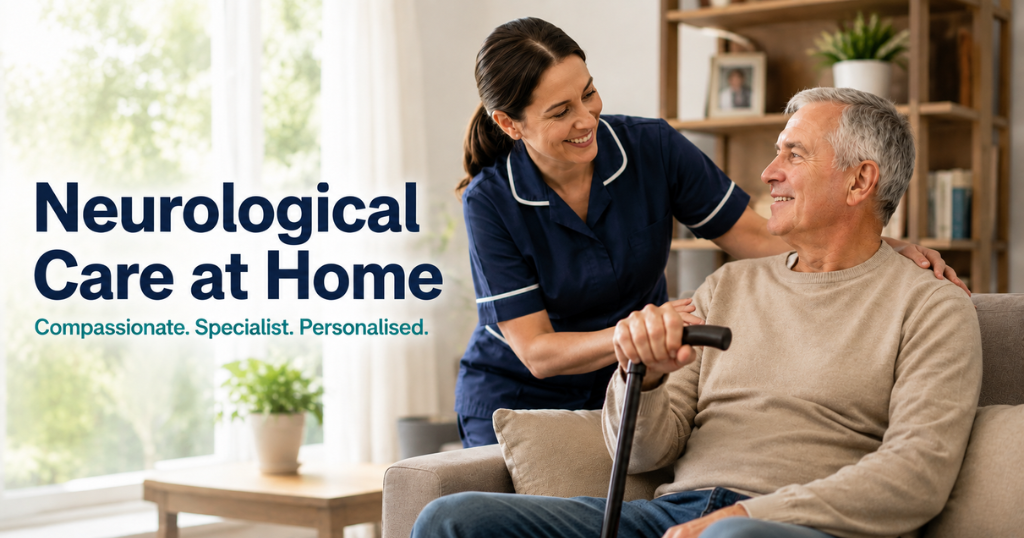
Neurological Care at Home: What Families Actually Need to Know
Neurological care at home is specialist support for adults living with a brain, spinal or nervous system condition – covering everything from mobility and communication to breathing, feeding, and medication – delivered by trained carers under nurse-led supervision, in the person’s own home. Great Life Care provides this support across England, with specialist nurses and therapists involved from the very first assessment.
If a consultant, discharge team, or GP has mentioned “neurological care” and you’re trying to work out what that actually involves day-to-day, this guide breaks it down plainly – no jargon, no guesswork.
What Neurological Care at Home Actually Means
A neurological condition affects the brain, spinal cord, or nervous system – and because that system basically runs the whole show, the effects rarely stay in one lane. It can touch movement, balance, communication, breathing, swallowing, memory, and mood, sometimes all at once.
Neurological care at home is the support built around that reality. It’s not just about managing a single symptom – it’s about helping someone stay safe, comfortable, and as independent as possible, in the surroundings they already know.
Depending on the person, that support can include personal care, mobility assistance, medication routines, nutrition and PEG feeding support, respiratory care (including tracheostomy or ventilator dependency), communication support, pressure area care, and catheter or colostomy care.
Who Tends to Need Neurological Home Care
This kind of support isn’t limited to one condition or one age group. It’s commonly needed by adults living with:
- Parkinson’s disease
- Traumatic brain injury
- Spinal cord injury
- Stroke-related needs
- Multiple sclerosis
- Motor neurone disease
- Respiratory conditions linked to a neurological diagnosis
- Tracheostomy or ventilator dependency
- PEG feeding needs
- Reduced mobility or pressure care needs
- Long-term neurological conditions more broadly
Some families are looking for support straight after a hospital discharge. Others are managing a progressive condition over months or years. Reliable neurological care at home should be able to flex around both.
How Great Life Care Builds a Neurological Care Plan
Every condition presents differently, so a generic rota rarely works well. Here’s the process Great Life Care actually follows:
- We listen first – understanding the person’s condition, daily challenges, and what the family is worried about.
- We assess the needs properly – nurses and care leads review clinical risk, care needs, and the home environment itself.
- We build a personalised, risk-based care plan – focused on clinical safety, rehabilitation, and independence.
- We match the right care team – carers chosen for the specific skills and experience the condition calls for.
- Care begins at home – with clear guidance and calm, practical support from day one.
- We review and adapt – as the condition changes, so does the plan.
According to the NHS’s overview of neurological conditions, ongoing, coordinated support is often central to managing long-term neurological illness well – which is exactly why a care plan that’s reviewed regularly, rather than set once and left, matters so much.
Neurological Care at Home vs. Live-In or 24-Hour Care
These terms often get used interchangeably, but they’re not quite the same thing. Neurological care describes the type of clinical support someone needs. Live-in care and 24-hour care describe the format that support can take — a carer living in the home, or round-the-clock cover including waking nights. Great Life Care offers visiting care, overnight care, live-in care, and 24-hour care, with the right format decided during the initial assessment.
Frequently Asked Questions
What is neurological home care?
Neurological home care is specialist support for adults dealing with a brain or nervous system condition – covering everything from mobility and personal care to more clinical needs like respiratory support, delivered in the person’s own home rather than a hospital or care facility.
Who can benefit from neurological care at home?
Adults living with stroke, Parkinson’s disease, multiple sclerosis, brain injury, spinal injury, motor neurone disease, or other neurological conditions often benefit – particularly where daily life has been affected by mobility, communication, or breathing changes.
Can neurological care start right after a hospital discharge?
Yes. Great Life Care can help plan safe support at home following discharge, including personal care, mobility assistance, medication routines, and daily living support, so there’s no gap between leaving hospital and having proper care in place.
Do you provide live-in or 24-hour neurological care?
Yes. Support can be arranged as visiting care, overnight care, live-in care, or full 24-hour home care, depending on what the person’s condition actually requires.
Will the care plan be personalised?
Yes. Every neurological care package is built around the person’s specific condition, daily routine, safety needs, comfort, and quality of life – and it’s reviewed regularly as those needs change.
The Bottom Line
Neurological care at home isn’t about replicating a hospital ward in someone’s living room. It’s about giving people with brain, spinal, or nervous system conditions the clinical support they need, while keeping them in the place and the routine that actually feels like home.
Great Life Care is CQC registered and provides specialist neurological home care across England, alongside related support such as complex care, respiratory home care, and brain injury care at home. If you’re trying to work out the right level of support for your family, a free, no-obligation care assessment is the clearest place to start.
Book a free care assessment or call 024 7722 0605 to talk it through with the team.